

A valid heavy equipment operator certification is not only a legal requirement, but also your best protection against accidents and a key to more job opportunities in the construction industry. To operate construction machinery in Norway, you must have a machine operator’s license for the specific machine class.
The system is divided into classes from M1 to M6, which can be confusing. This article provides a complete overview of what the different classes entail and how to go about obtaining your construction equipment operator’s license.
Why is a machine operator course required by law?
The training requirement is set forth in Section 10-2 of the Regulations on the Performance of Work. The regulations stipulate that anyone who is to use work equipment that requires special caution must have documented safety training. Heavy construction machinery definitely falls into this category.
The purpose of a machine operator training course is to provide the operator with the necessary knowledge regarding safe operation, maintenance, and potential hazards. An operator without adequate training poses a significant risk to themselves and others in the workplace.
Certificate of Competency vs. Machine Operator's License
It is important to distinguish between a general certificate of competence and a machine operator’s license. A certificate of competence confirms that you have received training on a specific type of equipment (e.g., fall protection, aerial lift). A construction equipment operator’s license is the official certification required to operate earth-moving machinery in classes M1 through M6.
Understanding the Engine Classes: M1 through M6
When you take a machine operator course, you choose one or more classes based on the types of machines you will be operating. Here is an overview of what the different classes cover.
M1: Dump Truck
Dump trucks are specially designed for transporting materials such as soil, gravel, and rock over short distances, often on rough terrain. They come in various sizes, ranging from small, compact models to enormous articulated dump trucks with a load capacity of over 50 metric tons.
M2: Excavator
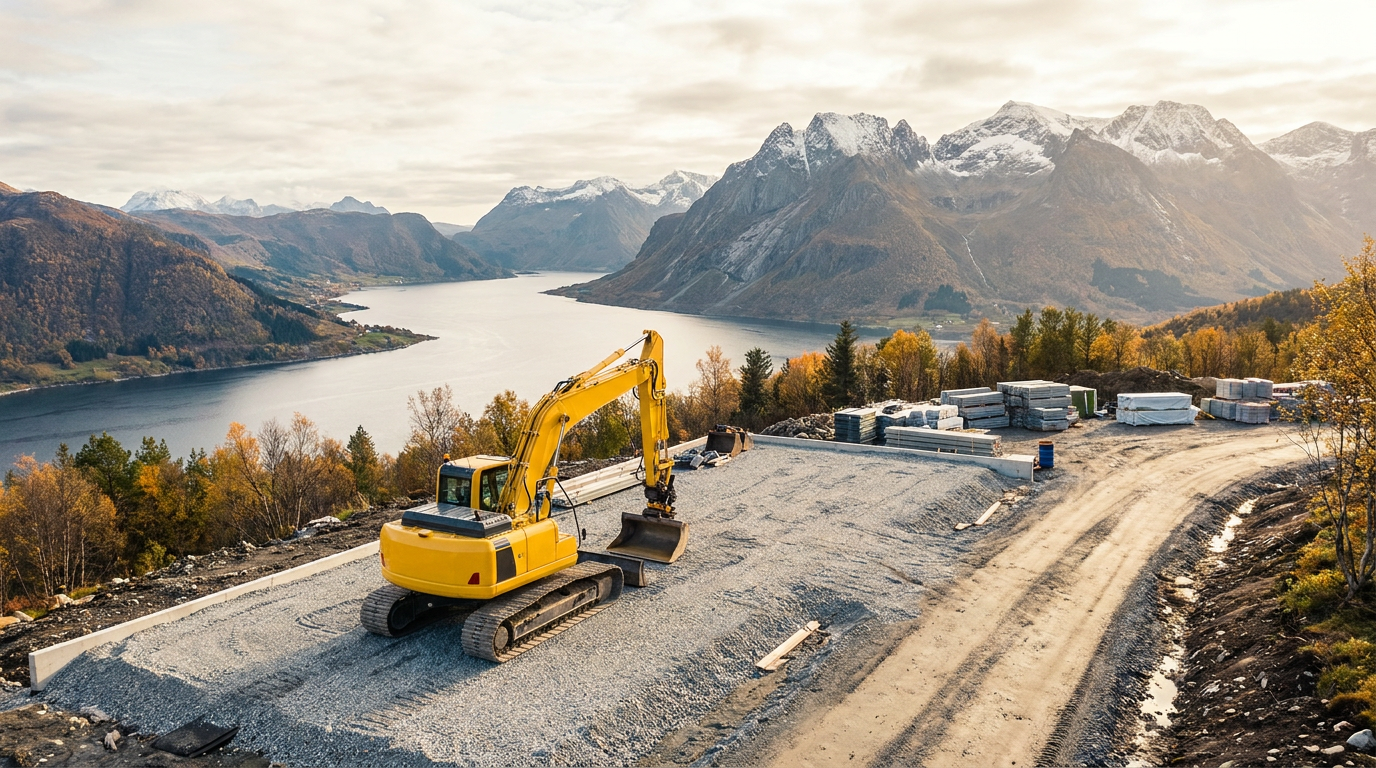
The excavator is one of the most versatile and widely used machines in the industry. It is used for everything from digging trenches and grading to loading and demolition work. The M2 certification covers both tracked and wheeled excavators over 15 kW (approx. 20.4 hk).
M3: Road Grader
A motor grader, also known as a grader, is a specialized machine used to level and shape large surfaces. It is indispensable in the construction and maintenance of roads, airports, and other large areas to ensure proper slope and drainage.
M4: Wheel Loader
The wheel loader is the workhorse of the construction site, designed for loading and moving large volumes of material such as gravel, rock, snow, and soil. It is highly efficient and can be equipped with various attachments such as pallet forks, snow blades, and brooms, making it extremely versatile.
M5: Gravel Loader
The wheel loader-excavator combines the functionality of a wheel loader (at the front) and an excavator (at the rear). This "all-in-one" machine is popular for smaller projects where you need the flexibility to both load and excavate without switching machines.
M6: Bulldozer
The bulldozer is the ultimate machine for heavy-duty pushing and grading work. With its powerful front blade, it is used to move large quantities of soil, rock, and other materials. It is commonly seen on large construction projects, in open-pit mines, and during road construction in challenging terrain.
How to Get a Construction Equipment Operator's License
The path to obtaining a machine operator's license consists of four modules. The process ensures that you have both the theoretical knowledge and the practical skills required.
Step 1: Common Theory Section (Module 1.1)
This is an 8-hour course covering the basics of health, safety, and the environment: the work environment, responsibilities, and consequences. Many people choose to take Module 1.1 as an online course, as it offers flexibility in a busy workday. This serves as a common foundation for all types of certified safety training.
Step 2: Theoretical Training for Machine Class (Module 2.1)
This section is specific to the machine class (e.g., M4 Wheel Loader) you have selected. Here you will learn about the machine’s design, operation, safety procedures, and maintenance. The theory section concludes with a written exam that you must pass to proceed.
Step 3: Basic Hands-On Training (Module 3.1)
Now the practical part begins. Together with an instructor, you’ll receive basic training in how to use the machine in a safe, enclosed area. The goal is to become familiar with the machine’s functions and how to operate it.
Step 4: Volume Training and Race Preparation (Module 4.1)
The last part is volume training. Here, you have two options:
1. Training provided by the course organizer: You will complete a specific number of hours of practical driving under the supervision of an instructor.
2. In-house training: You will operate the machine under the supervision of a "mentor" at your own company. The mentor must have held a machine operator's license for the relevant class for at least 3 years and must be able to document their experience.
After completing the required training hours, you will take a practical test (driving test). Once you have passed this test, your construction equipment operator’s certificate will be issued and registered in the Central Register for Safety Training (SFS).
Ready to start your training?
A heavy equipment operator course is a solid investment in your own skills and safety. It opens doors to new opportunities and makes you a more attractive candidate in the construction industry.
The first step on this journey is the theory. With us, you can take the theoretical portion as a flexible online course, whenever and wherever it suits you. This will give you the foundation you need before moving on to the practical training.
[Check out our relevant courses and start your journey toward getting your machine operator's license today!](https://kompletthmsshop.no)
Frequently Asked Questions
How much does a heavy equipment operator course cost?
Prices range from approximately 5,000 kr for theory-only courses to over 30,000 kr for comprehensive courses that include hands-on training. This depends on the machine class, the number of sessions, and the training location.
How long is a machine operator's license valid?
The machine operator's license itself has no formal expiration date. However, your employer is required to ensure that you have sufficient and up-to-date skills to perform the work safely.
Can I take an online machine operator course?
Yes, the introductory theory section (Module 1.1 and Module 2.1) can be taken as an online course. However, the practical training and the final driving test require in-person attendance.
What is the penalty for driving without a driver's license?
Operating heavy equipment without a valid certificate is a violation of the Working Environment Act and may result in fines from the Norwegian Labor Inspection Authority, a work stoppage, and a reduction in insurance coverage in the event of an accident.
Do you need a machine operator course?
Komplett HMS offers online courses leading to a diploma within 1 hour. 10+ years of experience in the construction industry.