

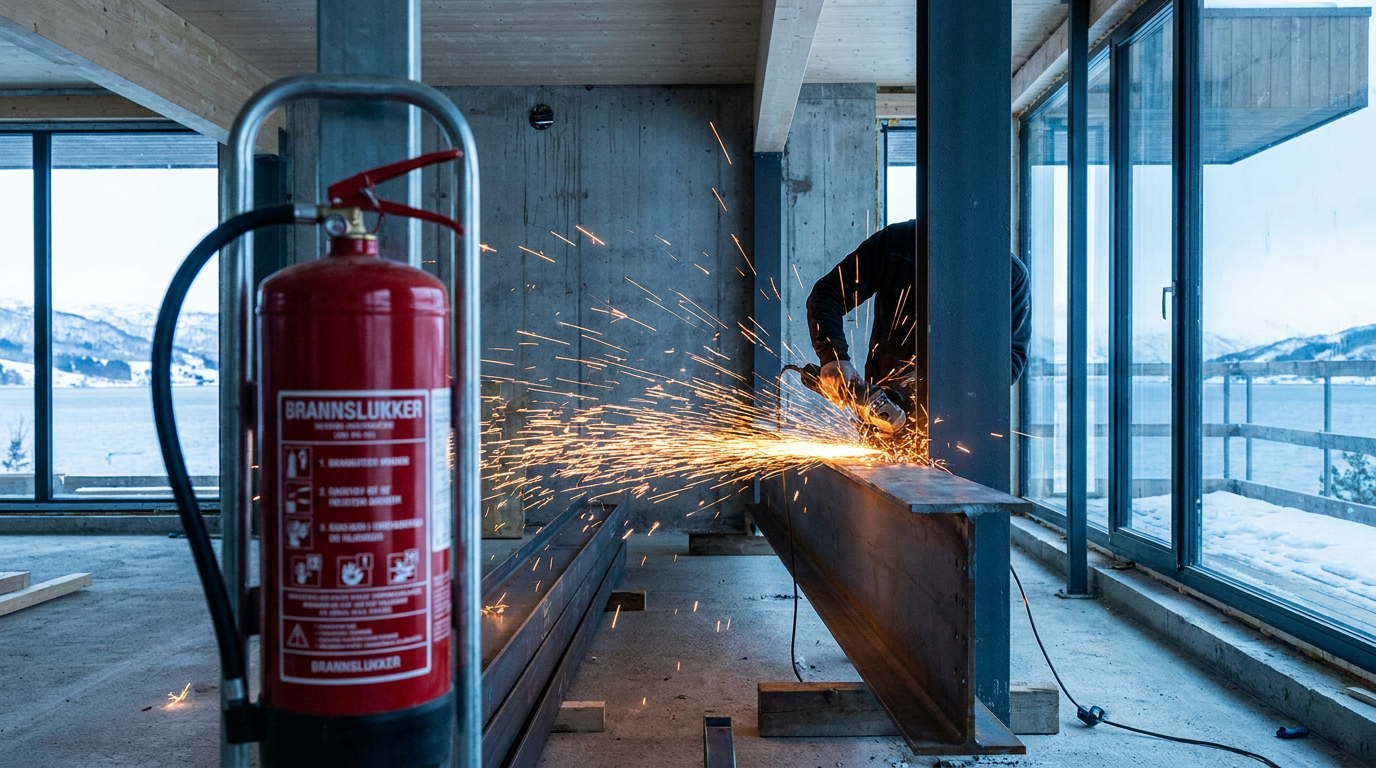
Work that produces flames, sparks, or intense heat may trigger requirements under insurance policies and safety regulations. The certification program for hot work must therefore be understood as part of the company’s fire prevention measures—not as a universal training requirement under the Working Environment Act with the same wording.
When is a certificate required for hot work?
This requirement generally applies when hot work is performed in environments where there is a risk of fire and the insurance policy refers to the safety regulations. The business must review its own insurance terms, the work site, and the applicable rules of the certification program.
Work in a permanently established workshop may be assessed differently than temporary work on a construction site, on a roof, or at a customer’s location. The working conditions and insurance terms must be clarified.
Contractor and Fire Watch
- Operators: must be aware of the risks associated with the tool, keep the work area tidy, and follow applicable safety procedures.
- Fire Watch: Must understand the duties, be present when required, and follow up after the work is completed.
- Employer or client: must clarify responsibilities, permissions, fire extinguishing equipment, and local conditions.
The training should cover the following
- how fires can start and spread
- Risk Assessment and Inspection of the Workplace
- clearing, shielding, and handling of combustible materials
- Fire-fighting equipment and alarms
- the roles of the person in charge of operations and the fire watch
- permits, checklists, and documentation
- follow-up inspection once the work is completed
Insurance requirements and legal requirements are not the same
Work environment regulations require proper training and risk management. The specific certification requirements for hot work are typically set forth in the insurance policy and safety regulations. Failure to comply may have consequences under the insurance agreement, but the outcome must be assessed on a case-by-case basis by the insurance company.
Things to Check Before Booking a Course
- Which certificate scheme does the insurance company accept?
- Is a hands-on fire extinguisher drill included, or does it have to be conducted separately?
- Which roles within the company require certification?
- How long is the certificate valid, and when does it need to be renewed?
- How are training and local procedures documented?
View current exchange rates and applicable rate information
Frequently Asked Questions
Is a hot work certificate required by law?
The specific certification requirements are generally in accordance with insurance terms and conditions and safety regulations. At the same time, workplace safety regulations set requirements for safe working practices, training, and risk assessment.
Does the fire watch need training?
The fire watch must have the necessary qualifications for the job. Check the certification requirements and insurance terms to see what applies.
How long is the certificate valid?
Check the date on the certificate and the current rules of the certification program. Do not base your renewal on outdated blog posts.
Updated August 15, 2026. Always check the insurance terms and conditions and the certification requirements before work is performed.
Renew the Hot Work Certificate
When your certificate is about to expire, you must check the current rules of the certification program and the insurance terms and conditions. Renewal may require a new course and a practical fire-extinguishing drill. See the hot work course for current schedule, content, and price.
Would you like to view the course?
See the price and the most important information you need to know all on one page.
Simple: Select the quantity, add it to your cart, and check out. If you need help, give us a call.